


Acoustic Online Calculations
We’ve compiled a selection of simplified calculation approaches to provide rough acoustic estimates for common questions. These calculations are intended solely for initial orientation and do not replace the detailed analysis we apply when designing our silencers.
For an advanced noise study or tailored advice, please don’t hesitate to contact us.
Sound Pressure Level Variation as a Function of Distance
dB
distance R1
distance R2
Lp2
dB

R1
R2
Lp 1
Lp 2
Lp1: Measured sound pressure level at distance R1 from the source
R1: Distance from the sound source at which the measurement was taken
R2: Distance from the sound source at which the sound pressure level is to be calculated
Lp2: Calculated sound pressure level at distance R2 from the sound source
Determining the Sound Power Level
on Measured Sound Pressure
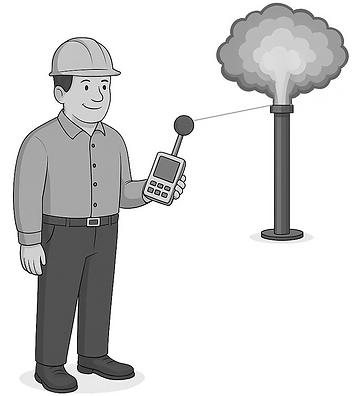
dB
m
Lw
dB
Lw
Lp
R
Lp: measured Sound pressure Level
R: Distance from the sound source
Lw: Calculated sound power level of the source
Determining the Sound Pressure Level
on given Sound Power Level
dB
m
Lp
dB

Lp
R
Lw
Lw: given Sound Power level
R: Distance from the sound source
Lp: Calculated Sound Pressure Level of the source
Valve Noise (Internal Sound Power Level)
kg/s
bara
bara
imp | met
The internal sound power level of a valve is a measure of the acoustic energy emitted by the valve into the piping system. It is expressed in decibels dB(A) and refers to the sound transmitted inside the pipe, not to the outside environment. This value is important for the acoustic design of systems to prevent noise propagation through pipelines.
Lw
dB(A)

Lw
Medium: Select a gas
M: Capacity
P1: Pressure upstream of the valve
P2: Pressure downstream of the valve
Lw: Internal sound power level of the valve